At the Neon Museum Las Vegas, the city’s past comes into view through colour, light and lettering. A towering sign recalls a legendary hotel. A sweeping script points to a chapter in civil rights history. Nearby, faded bulbs reveal the craft behind an unforgettable advertisement.
The museum offers a different way to experience Las Vegas. Here, familiar names become starting points for stories about architecture, entertainment, design and the people who shaped the city.
Why the Neon Museum Las Vegas Matters
Las Vegas has always used signs to announce its ambitions. Along the Strip and downtown, bright marquees competed for attention and helped turn buildings into landmarks. Over time, those signs became part of the city’s identity.
Founded in 1996, the Neon Museum began collecting and exhibiting signs as works of art and pieces of local history. In 2021, it earned accreditation from the American Alliance of Museums, recognizing its work as a museum.
Today, the collection spans decades of changing styles and technology. As you explore, look beyond the famous names. Notice the shapes, colours and materials that once persuaded visitors to stop, stay and see a show.
Walk Through the Neon Boneyard
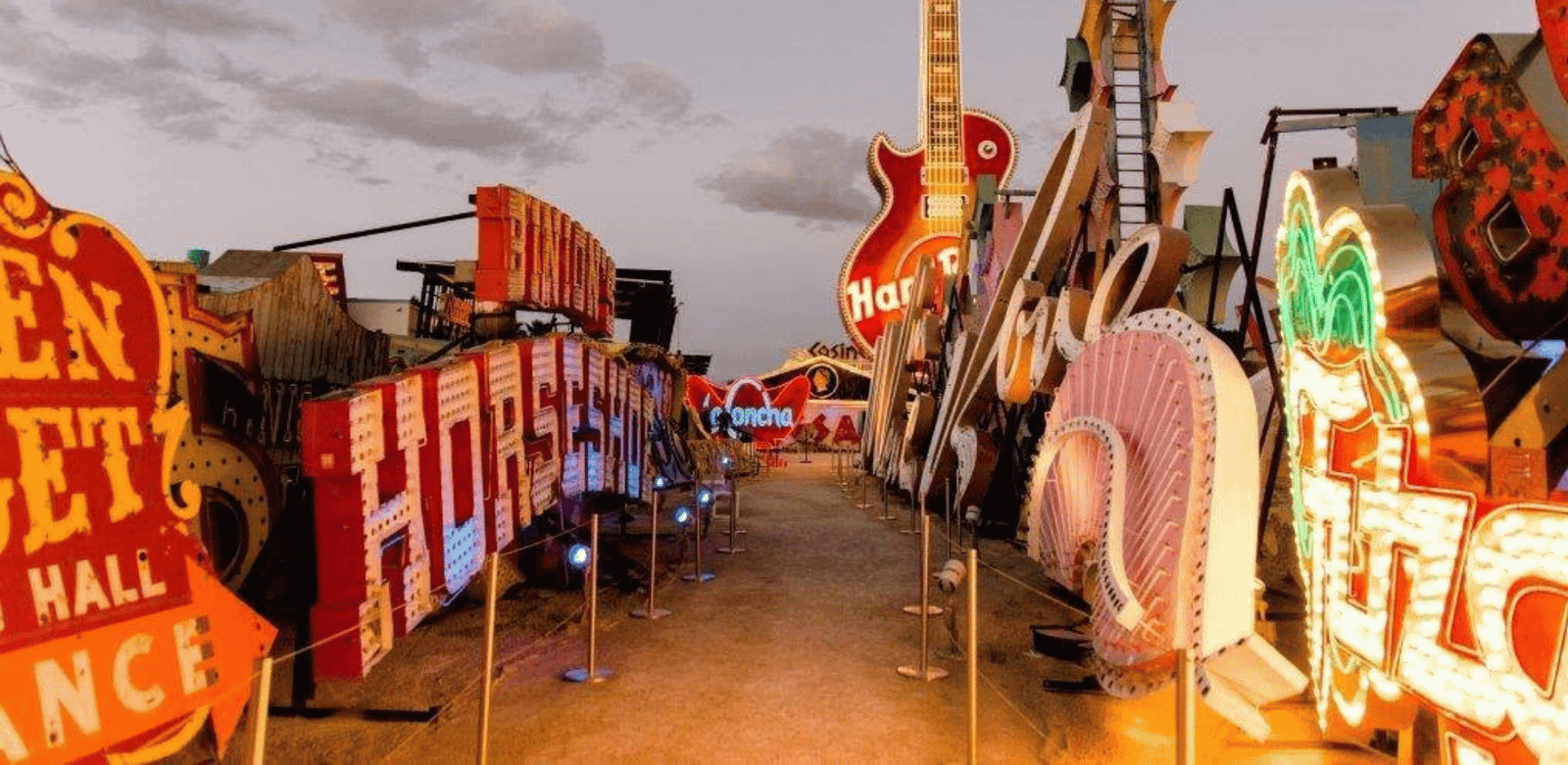
The outdoor Neon Boneyard holds the museum’s main sign collection. The name comes from a term for a place where retired objects are stored. Here, those objects become a carefully presented record of the city.
Some signs still glow, while others retain the patina of years spent outdoors. Together, they reveal the scale of the work. Letters that once seemed small from the road can tower above you when viewed up close.
A visit rewards curiosity. Look for the sweep of a letter, the curve of a metal frame or the path of a neon tube. Then, imagine how each piece appeared to someone arriving in Las Vegas for the first time.
The Stardust and the Space Age
The Stardust sign reflects an era when Las Vegas embraced the excitement of space and atomic-age design. Its dramatic scale and cosmic imagery made it a landmark on the Strip.
At the museum, the sign helps tell a broader story about how Las Vegas sold a sense of possibility. Its bold design promised visitors an experience unlike everyday life. The Neon Museum
The Moulin Rouge and a Turning Point
The Moulin Rouge sign carries a story beyond its elegant lettering. When the hotel opened in 1955, it became the city’s first major integrated resort.
Sign designer Betty Willis created its distinctive script. Her work also included the “Welcome to Fabulous Las Vegas” sign and the Blue Angel Motel sign. Together, her designs helped shape how generations picture the city.
The Flamingo and the Art of Reinvention
The Flamingo installation brings together a roadside sign and two feather plumes. Restored and relit in 2024, the pieces offer a vivid example of how a familiar Las Vegas identity can take on new life.
Meanwhile, the museum continues to add to its collection. Recent acquisitions include signs and objects connected to The Mirage, preserving another chapter in the city’s evolving entertainment scene.
See Signs Reimagined in Brilliant! Jackpot
After exploring the Boneyard, consider adding Brilliant! Jackpot to your visit. Presented in the North Gallery, this audiovisual experience uses projection technology to animate more than 40 non-operational signs.
Artist Craig Winslow created the experience, which combines projected imagery with sound. Rather than physically restoring every sign in the gallery, the show uses light to suggest how they once appeared. The result gives historic pieces a new setting while keeping their stories in view. The Neon Museum
Check the ticket details when booking. The museum currently lists Brilliant! Jackpot as an add-on to evening admission, with a 45-minute runtime.
Step Inside the Historic La Concha Lobby
Your Neon Museum Las Vegas visit begins in a piece of architectural history. The visitors’ centre occupies the former lobby of the La Concha Motel, designed by architect Paul Revere Williams.
Built in 1961, its shell-like roof and sweeping curves make it an example of Googie architecture. The mid-century style drew on the shapes and optimism of the Space Age.
The lobby was saved from demolition and moved to the museum site in 2006. It opened as the visitors’ centre in 2012. Before entering the Boneyard, pause to appreciate a building that tells its own story about Las Vegas design.
Discover Neon Beyond the Museum
The collection extends beyond the museum grounds. Restored signs also appear as public art around Las Vegas, including installations downtown.
These signs offer a chance to see historic design in the context of the streetscape. After your museum visit, spend time downtown and look for the details you’ve learned to notice: lettering, colour, scale and light. The Neon Museum
Plan Your Neon Museum Las Vegas Visit
The museum is currently located at 770 Las Vegas Boulevard North. It has announced plans to relocate and expand, but says it remains open while that work moves forward. Confirm the location and visitor details for your travel dates.
To make the most of your visit:
- Choose your light. Daylight reveals the signs’ materials and details. After dark, illuminated pieces create a different atmosphere.
- Book ahead. The museum recommends advance tickets, particularly because evenings can sell out.
- Consider a guided tour. A history tour can add context to the people and places behind the signs.
- Dress for the outdoors. The Boneyard is outside, so check the forecast and wear comfortable, closed-toe shoes.
- Know the photo rules. Regular visits allow personal-use photography with phones or tablets. Other cameras and equipment require a separate photo experience.
- Check your admission type. Beginning January 1, 2027, the museum offers a single admission option in place of separate daytime and evening tickets.
The museum can modify or cancel visits during severe weather or extreme heat. The Neon Museum
Experience the Neon Museum Las Vegas at Your Own Pace
The Neon Museum Las Vegas invites you to see a familiar destination through a fresh lens. Its signs preserve more than old names: they reveal the designers, businesses and communities behind the city’s changing image.
Allow time to look closely, listen to the stories and appreciate the craft. Long after a sign leaves the street, its colour and character can still tell you where Las Vegas has been.